 English
 Español
 Français
 日本語
 한국어
 Deutsch
 Português
 Русский
 中文 (中国)

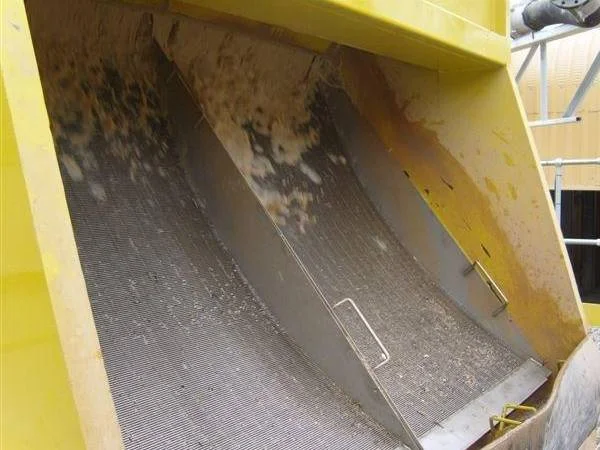
In industries such as mineral processing, chemical processing, food & beverage, water treatment, oil & gas, the performance of filtration equipment directly determines the stability of the whole production process. Conventional woven filter meshes suffer from frequent clogging, poor wear resistance and short service life. For this reason, wedge‑wire filters (Johnson screen filters) are increasingly adopted. Featuring welded V‑shaped profile wires, they solve common pain points of traditional filter media such as blockage, insufficient pressure resistance and difficult cleaning, and serve as core filter elements for self‑cleaning filters and industrial fine‑filtration systems.
1. What Is a Wedge‑Wire Filter
A wedge‑wire filter is assembled by resistance‑welding wedge‑shaped (V‑profile) filter wires to support rods. The filter slot presents an inverted‑trapezoidal profile: narrow on the outer surface to trap impurities and wider on the inner side to prevent particles from being stuck inside gaps.
Common product forms include filter cartridges, sector screen panels and flat screen plates. Available materials: 304, 304L, 316L, 2205 duplex stainless steel, suitable for corrosive, high‑temperature and high‑abrasion working conditions. Slot size can be customized from 0.05 mm to 5 mm.
2. Core Structural Advantages
- Anti‑clogging inverted‑trapezoidal slots Different from square holes of woven mesh, the outside‑narrow‑inside‑wide structure prevents particles from embedding into slots. It performs well for media with solid particles or high viscosity, greatly lowering clogging risk and fitting back‑washing and self‑cleaning operations.
- Robust welding structure with high pressure resistance Profile wires and support rods are fully fusion‑welded. The rigid structure resists deformation and cracking under large pressure difference, delivering far longer service life than ordinary woven filter cartridges.
- Large open area for high filtration efficiency High effective open area reduces flow resistance, cuts system energy consumption and allows larger processing capacity.
- Easy‑to‑clean & reusable Smooth surface without dead corners. It can be cleaned by high‑pressure water jet or ultrasonic treatment for repeated use, lowering replacement cost of consumables.
- Customizable materials for corrosion & wear resistance Duplex stainless steel handles seawater, acidic mineral pulp and other corrosive industrial media.
3. Main Application Scenarios
- Mining industry: mineral pulp dewatering, tailings dry stacking, ore washing & classification, centrifuge screen baskets, sieve bend filter elements.
- Water treatment: well water / groundwater filtration, seawater pre‑treatment, sewage treatment, filter cartridges for self‑cleaning filters.
- Petrochemical industry: oil well sand control, chemical raw‑material filtration, catalyst recovery.
- Food & beverage: syrup and fruit‑juice filtration, grain steeping filtration.
- Other sectors: sugar‑making, paper‑making, pharmaceutical production, starch processing and other solid‑liquid separation processes.
4. Key Selection Points for Wedge‑Wire Filters
- Slot size: The slot opening must be smaller than the solid particles to be trapped, which is the top priority in selection.
- Material: 304 for general clean‑water conditions; 316L / 2205 duplex stainless steel for seawater and acidic media.
- Structure form: Confirm cylindrical filter cartridge, flat screen plate or sector panel according to equipment cavity dimension.
- Dimension parameters: cartridge diameter, effective filtration height, flange connection size.
- Working conditions: operating temperature, maximum pressure difference and medium corrosiveness determine wall thickness and support‑rod density.
5. Performance Comparison with Traditional Woven Mesh
表格
| Item | Wedge‑Wire Filter | Ordinary Woven Metal Mesh |
|---|---|---|
| Slot Structure | Inverted‑trapezoidal, narrow outside wide inside | Square through‑hole |
| Anti‑clogging Performance | Excellent | Prone to particle blockage |
| Pressure Resistance | High, integrally welded | Poor, easy bulging & deformation |
| Cleaning & Reusability | Reusable after repeated washing | Hard to clean, short service life |
| Cost | Higher initial investment | Low unit price |
| Applicable Conditions | High‑abrasion, high‑pressure‑difference, clog‑prone media | Simple low‑requirement filtration |
Note: Although wedge‑wire filter elements cost more at initial purchase, their long service life and low maintenance cost bring better overall economy for continuous industrial production lines.
Conclusion
With the unique welded wedge‑wire structure, wedge‑wire filters resolve typical drawbacks of traditional filter meshes including clogging and easy damage. They are widely used across mining, water treatment, chemical and other industries. Proper selection of slot size, material and working‑condition parameters guarantees stable and efficient solid‑liquid separation. It is a highly reliable filtration solution for production lines requiring long continuous running and extended maintenance cycles.
Please login to write a comment after