 English
 Español
 Français
 日本語
 한국어
 Deutsch
 Português
 Русский
 中文 (中国)

Introduction
In hydropower projects and surface water intake systems, efficient debris exclusion and aquatic life protection are critical challenges. The Coanda screen, also known as a Coanda-effect static screen, has emerged as a widely adopted passive solution for these purposes. This article explores the working principle of the Coanda screen, its mechanisms for protecting aquatic life, and its debris-blocking capacity, drawing on technical and regulatory data from international sources.
What Is a Coanda Screen?
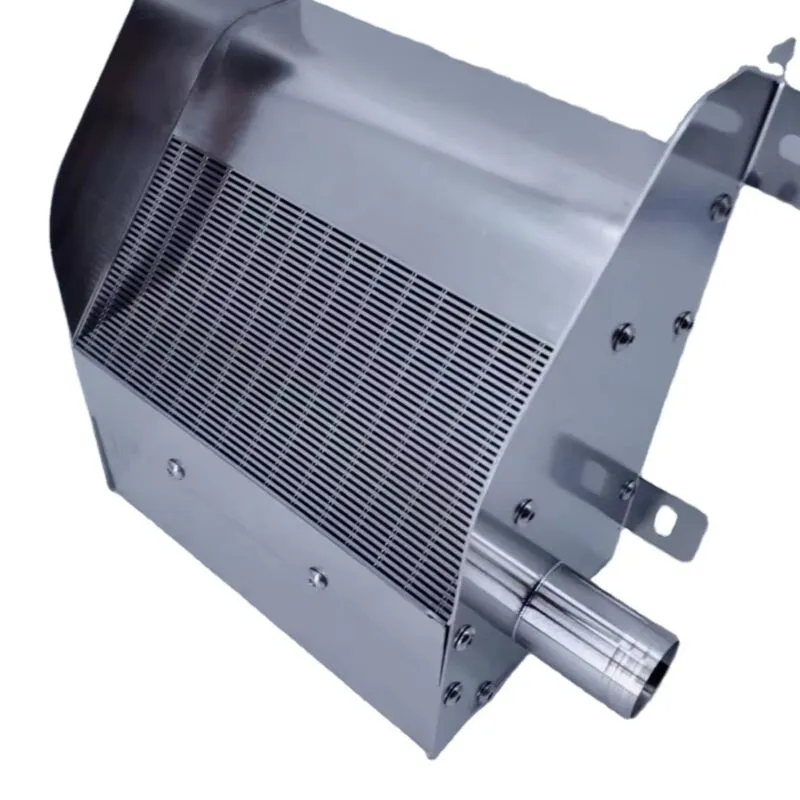
A Coanda screen is a static intake device that utilizes the Coanda effect — the tendency of a moving fluid to remain attached to a curved or inclined surface — to separate clean water from debris and aquatic organisms. The term honors Henri Coandă, an aerodynamics pioneer .
The screen consists of a curved wedge-wire surface with tilted wires, typically with apertures between 0.5 and 1 mm. Water is accelerated over an accelerator plate (often with an ogee profile) and flows tangentially over the screen surface. The tilted wires, typically at 5° to the flow (ranging from 3° to 6°), create a shearing effect that directs a thin layer of clean water through the slots, while debris, sediment, and fish remain on the surface and are carried off the structure .
Coanda screens were commercialized from the 1980s–1990s for small-hydro and water-supply intakes. Their ability to exclude fine sediment, debris, and fish without power or moving parts made them a favorite for run-of-river and mountain intakes .
How Does the Coanda Screen Protect Aquatic Life?
Exclusion Mechanism
Unlike conventional screens that operate by sieving, the Coanda screen operates by shearing. The surface layer of water, which is diverted to the intake, is separated from the main flow. Fish and larvae, which tend to swim or be carried in the deeper or surface portion of the flow, are swept across the screen surface and returned to the river downstream .
Fish Exclusion Efficiency
Experimental data indicate that Coanda screen effectiveness varies with fish size. Tests conducted at the Colorado State University Larval Fish Laboratory (Bestgen, 2000) demonstrated that for fish longer than 12.5 mm, exclusion rates were “nearly 100%” . However, for smaller fish, effectiveness decreases considerably. Additional studies indicate that for 7.5 mm fish, exclusion rates can be significantly lower, and survival after passage over the screen may be reduced under high-flow conditions.
Regulatory Apertures
Regulatory agencies establish specific aperture standards for fish protection:
-
Wales (Natural Resources Wales): Maximum aperture of 3 mm for most upland catchments and 1 mm for reaches near the sea, to prevent upstream-migrating glass eels and elvers from entering .
-
United Kingdom: Coanda screens generally used with apertures below 3 mm .
-
New Zealand: 1 mm apertures can exclude all debris greater than 1 mm and 90% of particles >0.5 mm .
Plunge Pool Requirements
To ensure fish passing over the screen are not harmed, a plunge pool downstream is essential. This pool must have adequate depth to cushion the fall and prevent fish from being injured or stranded .
How Does the Coanda Screen Block Debris?
Self-Cleaning Mechanism
The Coanda screen is designed to be self-cleaning. The surface inclination and shearing effect ensure that debris and sediment are continuously swept across the screen and discharged downstream, without accumulating in the slots. Minimum water velocity across the screen is essential for this process .
Solids Removal Efficiency
Studies on total suspended solids (TSS) removal efficiency in urban stormwater systems equipped with Coanda screens indicate variable rates:
| Study | TSS Removal | SSC Removal | Notes |
|---|---|---|---|
| Buer & Selbig (2019) | 23% | 45% | Concrete vault with 1 mm screen |
| Balakrishnan (2012) | 18% | — | Agricultural pond in Texas |
| May (2015) | — | 43-52% | Variation with wire tilt angle |
The Coanda screen is most effective at removing gross solids and particles equal to or larger than the screen slot size, but has limited effectiveness on pollutants associated with smaller particles or in the dissolved phase .
Design Parameters
Critical parameters for screen performance include:
-
Drop height: Provides the gravitational energy driving flow over the screen .
-
Inclination and curvature: Affect velocity and flow pattern over the surface .
-
Slot width: Typically 0.5–1 mm, determining the minimum particle size excluded .
-
Wire angle: Typically 5° (range 3°–6°), determining shearing efficiency .
-
Minimum flow: At least 25% of total flow must be used for washover and debris transport. For a 5 m³/s draw-off, the initial river flow must be at least 6.25 m³/s .
Advantages and Limitations
Advantages
-
No moving parts and no power: Passive and self-cleaning .
-
Excellent fine-debris and sediment exclusion: Sub-millimeter apertures .
-
Strong fish and larvae exclusion: Especially for fish larger than 12.5 mm .
-
Very low maintenance: Visual checks and brushing approximately quarterly .
-
High reliability: No mechanisms that can fail .
Limitations
-
Requires vertical drop: Gravity-driven device .
-
Limited capacity per unit width: Not suited to large, flat-site, or deep open-water intakes .
-
Performance varies with flow: Efficiency may decrease at low flows .
-
Risk of fish injury at low flows: Fish passage over the screen under low-flow conditions may cause injury, requiring monitoring .
-
Debris accumulation at low flows: Build-up may occur, which is washed off during subsequent high-flow events .
Applications and Field Experience
Notable Installations
-
Lake John, Colorado (USA): Four Coanda screen panels replaced a sand filter in 2001. Each panel 5 ft wide by 47 inches long, 0.5 mm aperture, design flow approximately 30 ft³/s. The screen significantly reduced maintenance problems .
-
Rocky Mountain Arsenal Wildlife Refuge, Colorado: 20 ft long screen, design flow 20 ft³/s, installed in 2000. Replaced wire mesh panels that required cleaning several times per day .
-
Montgomery Creek, California (since 1985): Design flow approximately 120 ft³/s, utilizing 24 Aqua Shear panels with a total crest width of about 36 m .
-
United Kingdom: 22 Coanda screen installations reported by 2003, mostly at small-scale private hydropower installations with capacities ranging from 10 to 1,300 l/s .
Maintenance Experience
Field experience indicates that the Coanda screen requires minimal maintenance. In the Keswick study (Cumbria, UK), after 15 months of operation, no noticeable signs of wear were observed, and there were no records of blockages by debris. A thin film of algae developed but was readily cleaned with a stiff brush .
Conclusion
The Coanda screen represents an efficient, low-maintenance solution for river water abstraction, offering significant protection for aquatic life and debris exclusion. Its effectiveness in excluding fish larger than 12.5 mm is well documented, and sub-millimeter apertures enable fine sediment removal. However, limitations related to capacity per unit width, dependence on vertical drop, and variable performance with flow must be considered in sizing. For applications in rivers with sensitive fish communities, the Coanda screen, when correctly designed and integrated with an adequate plunge pool, constitutes a robust and environmentally responsible technology.
Please login to write a comment after