 English
 Español
 Français
 日本語
 한국어
 Deutsch
 Português
 Русский
 中文 (中国)

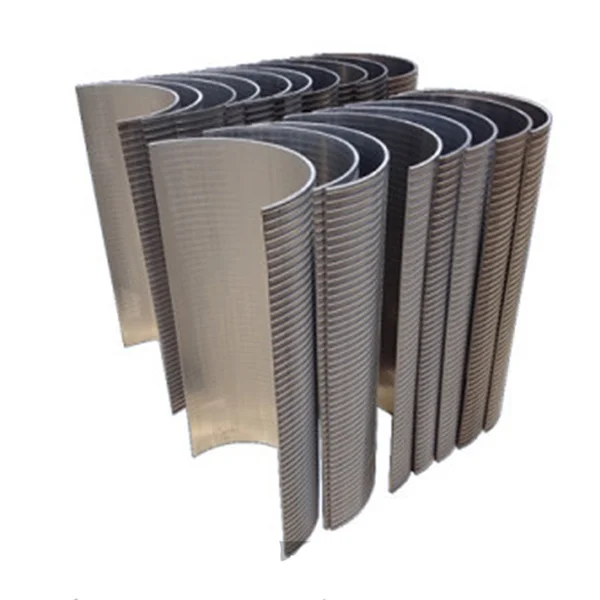
1. What Is a Sieve Bend Screen?
A sieve bend screen, also known as a DSM screen (named after the Dutch State Mines where the technology was invented), is a highly efficient, non-powered solid-liquid separation device. Its core structure consists of an arc-shaped wedge wire screen panel that relies on gravity and centrifugal force generated as the slurry flows across the curved surface to rapidly separate water and fine particles. Because it requires no motors, vibrators, or other moving parts, it offers significant advantages including low energy consumption, easy maintenance, and high throughput. It is widely used in mining, wastewater treatment, food processing, and other industries.
Unlike flat vibrating screens that rely on mechanical vibration, the separation process of a sieve bend screen is static and gravity-driven, operating continuously. In dewatering, desliming, and classification operations involving high-concentration slurries, it often serves as the first pretreatment step, effectively reducing the load on downstream equipment.
2. Working Principle: More Than Just Gravity
The high separation efficiency of a sieve bend screen results from the combination of several physical effects. Its structure typically consists of an arched screen panel, a screen box (with an arc angle of 45° or 60°), a support frame, and a feed distribution box. The screen panel is manufactured by welding wedge-shaped non-magnetic stainless steel wires with T-shaped stainless steel wires using automatic resistance welding.
2.1 Core Separation Forces: Gravity, Centrifugal Force, and the Coanda Effect
During operation, the slurry is fed evenly from the feed box onto the upper end of the arched screen surface at a certain speed (usually relying on potential energy). As it flows downward along the curved surface, gravity serves as the primary driving force that pushes liquid through the screen slots. Simultaneously, the centrifugal force generated as the slurry moves along the curved path further pushes liquid and fine particles toward the screen surface, accelerating their passage through the slots.
In addition, when the slurry flows across the curved screen surface, the Coanda Effect occurs, meaning the liquid tends to adhere to the surface of the screen bars. This effect makes it easier for liquid to be “pulled” through the screen slots, significantly improving the dewatering rate. This process is most intense in the middle section of the screen arc.
2.2 Unique “Cutting” Action
The sieve bend screen panel is constructed from specially shaped wedge (V-shaped) stainless steel wires. The sharp edges on the feed side of the screen bars effectively break the surface tension of the water film around particles, thereby “cutting” the water and allowing it to carry fine particles through the screen slots.
2.3 Key Characteristic: Separation Size Approximately Half the Slot Width
This is the most unique technical feature of the sieve bend screen, the actual separation size is approximately half the physical screen slot width. Based on research into the classification principle of sieve bend screens and particle motion patterns on the screen surface, the relationship between the separation size and the screen slot width for coal slurry sieve bend screens can be expressed as:
d = k · L
Where:
-
d = separation size
-
L = screen slot width
-
k = a coefficient ranging from 0.534 to 0.732
This formula provides a simple calculation method for the selection and design of sieve bend screens.
2.4 Self-Cleaning Design and Long Service Life
The trapezoidal cross-section design of the wedge wires, wider at the bottom and narrower at the top, allows particles that become lodged in the screen slots to easily dislodge under gravity or water flow, providing excellent anti-clogging performance.
Furthermore, many sieve bend screens feature a 180° rotation function. When the feed end becomes worn, the screen frame can be rotated 180° around the central rotating shaft, turning the original discharge end into the feed end, thereby fully utilizing the entire screen surface and extending its service life.
3. Selection Guide: Key Parameters and Considerations
Selecting the appropriate sieve bend screen requires comprehensive evaluation of the following core parameters and actual operating conditions.
3.1 Key Performance Parameters
Screen Slot Width: The most important parameter, directly determining the separation size. Based on the separation size formula d = k·L (k = 0.534 to 0.732) , the required slot width can be calculated in reverse. Taking the coal preparation industry as an example, as the lower separation limit of gravity coal preparation decreased from 0.5mm at the end of the last century to 0.25mm in 2010, and further to the current 0.125mm, the screen slots of classification equipment have also been reduced from 0.5mm to 0.15mm, with screen bar back widths decreasing from 1.50mm to 0.76mm.
Throughput (Capacity) : Directly related to screen width, slot size, and material characteristics. Standard models offer throughput capacities ranging from 40 to 400 tons per hour, with screen widths ranging from 700mm to 2400mm. A single sieve bend screen can handle up to 122 liters of slurry per square meter per second.
Arc Angle: Refers to the angle subtended by the screen’s curved section. Common specifications include 45°, 60°, 90°, and even larger angles. A larger angle means a longer flow path for the slurry across the screen surface, providing more thorough dewatering time. For example, in the YHS series sieve bend screens, a 60° arc angle model can achieve a throughput of 60 to 280 tons per hour.
Screen Material: Standard material is typically 304 stainless steel; for corrosive environments (such as chemical processing or seawater applications), 316L or 2205 duplex stainless steel should be selected.
3.2 Selection Decision: Static vs. Vibrating Sieve Bend Screens
Sieve bend screens are divided into two categories: static and vibrating.
Static Sieve Bend Screens rely solely on gravity and centrifugal force. They are suitable for conventional dewatering and classification applications with stable throughput, offering good self-cleaning anti-clogging performance.
Vibrating Sieve Bend Screens incorporate vibration motors or knockers in addition to gravity and centrifugal force. They are ideal for applications involving sticky materials prone to clogging or requiring higher efficiency. They offer superior anti-clogging performance, with medium removal efficiency more than 1.2 times higher than non-vibrating models.
Real-World Case Study: At the Xiegou Coal Preparation Plant, a retrofit was implemented by adding knockers and vibration motors to the screen surface. After the modification, the dewatering efficiency of the vibrating knock-out sieve bend screen increased from 32% to 55.5%, coarse coal slime moisture content decreased from 14% to 10%, blended coal moisture decreased by 0.2%, calorific value increased by 0.48 MJ/kg, and annual cost savings reached 3.72 million RMB.
3.3 Additional Important Considerations
Value as Pretreatment Equipment: In dewatering operations, using a sieve bend screen or installing a sieve bend screen panel as a pre-screening surface ahead of vibrating screens can increase the vibrating screen’s processing capacity by 10 times, while significantly improving the recovery rate of coal particles smaller than 0.5mm.
Reducing Downstream Equipment Wear: In mining applications, sieve bend screens can reduce downstream pump wear by 30% to 40%.
Screen Surface Utilization: As mentioned earlier, prioritizing models with a 180° rotation function can significantly extend the effective service life of the screen panel.
4. Typical Application Scenarios
Sieve bend screens are particularly well-suited for the following applications:
Mining and Coal Preparation: For pre-dewatering, desliming, and medium removal from mineral slurries, as well as classification upstream or downstream of hydrocyclones. HS series sieve bend screens can be paired with hydrocyclones to process fine materials.
Wastewater Treatment: As a pretreatment step to intercept suspended solids such as fibers, food residues, and plastics from wastewater. YHS series sieve bend screens can achieve slot widths as fine as 0.15mm, making them suitable for fiber recovery and wastewater treatment.
Food and Starch Processing: For dewatering, fiber recovery, and juice refining, where the smooth screen surface does not damage soft materials.
Pulp and Papermaking: For recovering fibers from white water, reducing raw material waste and wastewater treatment load.
5. Summary
The sieve bend screen is a mature, cost-effective solid-liquid separation solution. Its core value lies in achieving zero energy consumption, high precision, and low maintenance continuous operation by harnessing gravity, centrifugal force, and the Coanda Effect.
When selecting a sieve bend screen, the following key points should be followed:
First, determine the separation size. Based on the process target separation size, use the formula d = k·L (k = 0.534 to 0.732) to calculate the required screen slot width in reverse.
Second, evaluate the need for vibration. For applications prone to clogging or requiring higher processing efficiency, a vibrating sieve bend screen is an ideal choice for significantly improving performance, with dewatering efficiency increasing from 32% to 55.5%.
Third, select the arc angle and width. Based on site space, throughput requirements, and material characteristics, choose the appropriate arc angle (commonly 45° or 60°) and screen width.
Fourth, choose the appropriate material. Based on the corrosiveness of the material, select 304, 316L, or 2205 duplex stainless steel.
Please login to write a comment after