 English
 Español
 Français
 日本語
 한국어
 Deutsch
 Português
 Русский
 中文 (中国)

- Introduction
- 1. The Technical Foundation: How Slot Geometry Drives Performance
- 1.1 Non-Clogging Slot Geometry
- 1.2 Open Area Calculation and Its Limitations
- 1.3 Slot Tolerance and Repeatability
- 2. Slot Selection for Brazilian Mining Operations
- 2.1 Brazilian Iron Ore Characteristics and Their Impact
- 2.2 Slot Size Ranges for Mining Applications
- 2.3 The Critical Factor: Particle Shape vs. Slot Dimension
- 2.4 Abrasion and Material Selection
- 2.5 Case Study: High-Moisture Screening at Vale
- 3. Slot Selection for Brazilian Wastewater Treatment Plants
- 3.1 Regulatory Framework: What NBR 12209 Requires
- 3.2 Why Wedge Wire Outperforms Bar Screens in Brazilian WWTPs
- 3.3 Recommended Slot Sizes for Brazilian WWTP Applications
- 3.4 Hydraulic Design Considerations
- 4. The Brazil-Specific Slot Selection Matrix
- 5. Slot Size Selection Methodology
- Step 1: Define the Separation Objective
- Step 2: Characterize the Feed
- Step 3: Select Preliminary Slot Size
- Step 4: Calculate Open Area and Flow Capacity
- Step 5: Validate Through Testing
- Step 6: Select Profile Wire and Material
- Step 7: Confirm Regulatory Compliance
- 6. Common Pitfalls in Slot Selection for Brazilian Applications
- Pitfall 1: Ignoring Particle Shape
- Pitfall 2: Underestimating Moisture Effects
- Pitfall 3: Overlooking Support Rod Effects
- Pitfall 4: Applying Temperate Climate WWTP Designs to Brazil
- Pitfall 5: Neglecting Abrasion in Mining
- 7. Conclusion
Introduction
Brazil’s industrial landscape presents unique challenges for solid-liquid separation. From the high-moisture, clay-bearing iron ores of the Quadrilátero Ferrífero to the variable flow rates of municipal Wastewater Treatment plants (WWTPs) under NBR 12209 and CONAMA 430 regulations, selecting the correct wedge wire flat screen slot size is a critical determinant of operational efficiency.
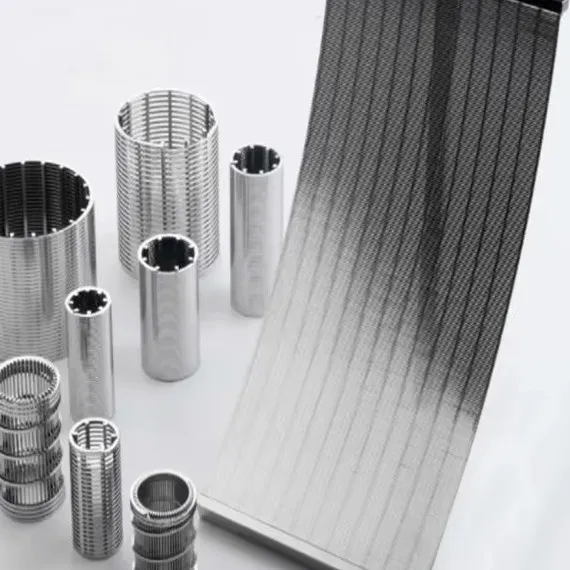
A wedge wire flat screen is not merely a filtration surface; it is a precision-engineered component. The V-shaped profile wire creates a continuous slot that widens toward the back, minimizing clogging and maximizing dewatering capacity . However, a slot size that performs well in a laboratory test may fail catastrophically in the field if it does not account for particle shape, feed moisture, abrasion, and the specific regulatory environment.
This guide synthesizes technical data from global wedge wire specifications with operational realities from Brazilian mining and wastewater sectors. It provides a structured methodology for slot size selection, addressing the unique conditions of Brazil’s iron ore processing and sanitary sewage treatment.
1. The Technical Foundation: How Slot Geometry Drives Performance
Before specifying a slot size, it is essential to understand the physics of the wedge wire screen.
1.1 Non-Clogging Slot Geometry
The defining feature of a wedge wire screen is the V-shaped profile wire. The slot narrows at the top surface and widens toward the back. This geometry creates two-point contact for particles: particles that just fit the slot pass through without jamming, while larger particles roll off the smooth surface . Backwash or chemical cleaning is effective because debris cannot wedge tighter as it moves through the slot .
1.2 Open Area Calculation and Its Limitations
The gross open area is calculated using the formula:
OA = Slot / (Slot + W)
Where W is the wire-top width of the V-profile. For example, a 0.5 mm slot with an AW 28 profile (W = 2.20 mm) yields a gross open area of 18.5% .
However, effective open area is typically 3-8% lower than the gross figure due to support rod spacing and width . This correction is critical for accurate flow capacity calculations.
1.3 Slot Tolerance and Repeatability
Resistance welding sets wire pitch at a tolerance typically within ±5% of the nominal slot value . For critical separations, this tolerance must be factored into process design.
2. Slot Selection for Brazilian Mining Operations
Brazilian iron ore processing, particularly in the Quadrilátero Ferrífero and Carajás regions, presents specific challenges: high abrasivity, variable moisture (often 9-13%), and increasing pressure to reduce water consumption through dry processing.
2.1 Brazilian Iron Ore Characteristics and Their Impact
The shift toward peneiramento a umidade natural (natural moisture screening) in Brazil, pioneered at Vale’s Carajás operations, has profound implications for screen media selection . When processing iron ore with high surface moisture, the screening mechanism shifts from geometric separation to a combination of stratification and dewatering. Traditional wire mesh screens suffer from cegamento (blinding), leading to frequent replacements—some operations reported 12 screen changes per year .
Key data points:
-
Brazilian iron ore feed moisture: 9% to 13% in critical screening ranges
-
Sinter feed target granulation: 0.12 to 0.15 mm
-
Dry screening at Carajás achieved 4.8% higher global equipment efficiency than wet processing
2.2 Slot Size Ranges for Mining Applications
Based on global mining practice adapted to Brazilian conditions:
| Application | Recommended Slot Range | Rationale |
|---|---|---|
| Dewatering (wet) | 0.25 – 1.0 mm | Balances water removal with solids retention |
| Desliming | 0.15 – 0.5 mm | Removes fines without excessive loss |
| Sizing/Classification | 0.5 – 2.0 mm | Depends on target cut point |
| Media Recovery | 0.5 – 0.8 mm | Recovers magnetite while passing slurry |
| Tailing Dewatering | 0.3 – 0.5 mm | For dry stacking applications |
GKD wedge wire screening media is available in aperture ranges from 0.15 mm to 10 mm with wire materials including 304 SS, 316 SS, 430 SS, and 3CR12 .
2.3 The Critical Factor: Particle Shape vs. Slot Dimension
A nominal slot opening does not automatically equal the effective separation size. Brazilian iron ores can contain needle-shaped or plate-like particles that pass through a slot even when one dimension exceeds the opening . The selection must consider:
-
Feed and product particle-size distributions
-
Particle aspect ratio and shape
-
Percentage of near-size particles
-
Clay and fine material content
For sieve bends and flat panels in wet classification, the actual cut is influenced by feed velocity, screen angle, bed depth, and water addition .
2.4 Abrasion and Material Selection
Brazilian iron ore is highly abrasive . The profile wire material and dimensions must be matched to the wear environment:
| Material | Application in Brazil |
|---|---|
| 304 SS | General dewatering, neutral pH slurries |
| 316L SS | Corrosive environments, chloride exposure |
| 2205 Duplex | High-wear, high-strength applications (iron ore tailings) |
The shift from metal wire mesh to rubber and polyurethane screens in Brazilian iron ore operations achieved 5x longer service life . For wedge wire screens in similar duty, selecting a heavier profile wire (e.g., AW 42 or AW 50) may be necessary despite the reduction in open area.
2.5 Case Study: High-Moisture Screening at Vale
Schenck Process Brazil developed a full-scale elliptical motion screen tested under 6g acceleration for high-moisture iron ore . Key findings:
-
At surface moisture 8-10%, traditional 45° operating angle resulted in poor efficiency
-
A 60° major axis with co-rotating exciters in flow direction improved fines liberation
-
At moisture >10%, slabby cakes formed, requiring high vertical acceleration to break up material
-
Balling of agglomerated fines was observed, indicating surface moisture at or above 12-13%
3. Slot Selection for Brazilian Wastewater Treatment Plants
Brazilian WWTP design is governed by NBR 12209 (ABNT, 2011) and effluent discharge standards under CONAMA 430/2011. The preliminary treatment stage—specifically fine screening—is critical for protecting downstream processes, particularly UASB reactors, which are widely used in Brazil.
3.1 Regulatory Framework: What NBR 12209 Requires
NBR 12209 classifies bar screens by spacing:
-
Coarse (Grosseira): 40 – 100 mm
-
Medium (Média): 20 – 40 mm
-
Fine (Fina): 10 – 20 mm
Critical requirement for UASB systems: For WWTPs with maximum flow up to 100 L/s, NBR 12209 mandates solid removal devices with openings equal to or smaller than 12 mm. For flows exceeding 100 L/s, screens with openings equal to or smaller than 6 mm are required, with 3 or 4 mm being the preferred operational choice .
This represents a significant shift from traditional bar screens (10-20 mm) toward fine screening (peneiramento fino) using wedge wire or similar continuous-slot media.
3.2 Why Wedge Wire Outperforms Bar Screens in Brazilian WWTPs
Traditional bar screens have a fundamental limitation: the bar height allows flat or fibrous material to pass through the gap between bars even when the material’s width exceeds the spacing . This results in capture efficiencies of only 40-50% for fine screens .
Wedge wire screens address this through:
-
Continuous slots with V-shaped geometry that resists blinding
-
High open area (up to 65% gross, vs. 25-40% for perforated plate)
-
Structural rigidity from welded construction
-
Effective capture of fibrous and flat material
For Brazilian WWTPs receiving sewage with high levels of plastics, textiles, and fibrous material, this improved capture is essential.
3.3 Recommended Slot Sizes for Brazilian WWTP Applications
| Application | Recommended Slot | Reference |
|---|---|---|
| Pre-UASB Fine Screen | 3 – 6 mm | NBR 12209 requirement |
| Small WWTP (<100 L/s) | ≤ 12 mm | NBR 12209 |
| General Fine Screening | 0.15 – 2.5 mm | Wedge wire filter capability |
| Rotary Drum Screening | 2 – 10 mm | Plate-frame rotary filter |
For sidehill screens (static wedge wire screens), slot sizes from 0.010″ (0.25 mm) to 0.125″ (3.2 mm) are standard for municipal primary sewage .
3.4 Hydraulic Design Considerations
Brazilian WWTP hydraulic design must account for:
-
Velocity through the screen: 0.6 – 1.0 m/s (NBR 12209)
-
Head loss: Maximum 0.15 m for manually cleaned screens at 50% obstruction
-
Velocity in upstream channel: Minimum 0.40 m/s to prevent sand deposition
The efficiency of a bar or wedge wire screen is calculated as:
E = a / (a + t)
Where a = aperture spacing and t = bar thickness .
For a wedge wire screen, the “efficiency” is better understood as the effective open area, which accounts for the support rod intersections.
4. The Brazil-Specific Slot Selection Matrix
Combining mining and wastewater requirements, the following matrix provides a starting point for slot selection. All recommendations must be validated through application-specific testing.
| Industry | Application | Feed Conditions | Recommended Slot | Profile Wire | Material |
|---|---|---|---|---|---|
| Mining | Iron ore dewatering | 9-13% moisture, highly abrasive | 0.25 – 0.5 mm | AW 42/50 | 2205 or 316L |
| Mining | Iron ore desliming | High clay content | 0.15 – 0.3 mm | AW 28/34 | 304/316L |
| Mining | Tailings dry stacking | Variable, high fines | 0.3 – 0.5 mm | AW 42 | 2205 |
| Mining | Media recovery | Magnetite slurry | 0.5 – 0.8 mm | AW 28/34 | 316L |
| WWTP | Pre-UASB screening | Municipal sewage | 3 – 6 mm | AW 18/28 | 304/316L |
| WWTP | Small plant (<100 L/s) | Municipal sewage | ≤ 12 mm | AW 18 | 304 |
| WWTP | Rotating drum | Fibrous material | 2 – 10 mm | AW 28/34 | 316L |
| WWTP | Sidehill screen | Primary sewage | 0.25 – 3.2 mm | AW 12/18 | 304/316L |
5. Slot Size Selection Methodology
Step 1: Define the Separation Objective
-
What is the target particle size for retention or passage?
-
Is the objective dewatering, classification, or solids removal?
Step 2: Characterize the Feed
-
Particle size distribution (PSD)
-
Particle shape (needle, plate, spherical)
-
Solids concentration
-
Moisture content (critical for Brazilian iron ore)
-
Abrasivity and corrosivity
Step 3: Select Preliminary Slot Size
-
For dewatering: slot ≈ 0.5 × target fines size
-
For classification: slot ≈ target cut point (with adjustment for particle shape)
-
For UASB pre-treatment: comply with NBR 12209 (≤12 mm or ≤6 mm)
Step 4: Calculate Open Area and Flow Capacity
-
Use OA = Slot / (Slot + W)
-
Apply 3-8% reduction for support rod effects
-
Verify against required flow rate
Step 5: Validate Through Testing
-
Laboratory screening tests are strongly recommended
-
For Brazilian iron ore, test at actual moisture content (9-13%)
-
For WWTPs, test with actual sewage containing fibrous material
Step 6: Select Profile Wire and Material
-
Heavier wire (AW 42/50) for abrasive mining duty
-
Lighter wire (AW 12/18) for wastewater with high open area requirements
-
2205 duplex for high-wear Brazilian iron ore tailings
-
316L for corrosive environments
Step 7: Confirm Regulatory Compliance
-
Mining: Verify against ANM requirements and environmental licensing conditions
-
WWTP: Confirm compliance with NBR 12209 and CONAMA 430
6. Common Pitfalls in Slot Selection for Brazilian Applications
Pitfall 1: Ignoring Particle Shape
A slot sized to a spherical particle D50 may allow needle-shaped particles to pass. Brazilian iron ores contain varying particle morphologies that require microscopic examination or shape factor analysis.
Pitfall 2: Underestimating Moisture Effects
At >10% surface moisture, Brazilian iron ore forms slabby cakes that resist screening . Slot sizes that work in dry laboratory conditions may blind in the field.
Pitfall 3: Overlooking Support Rod Effects
The effective open area is 3-8% lower than the gross calculation. For critical flow capacity, this correction is essential .
Pitfall 4: Applying Temperate Climate WWTP Designs to Brazil
Brazilian sewage characteristics (higher temperature, different organic load, potentially higher fibrous content) may require slot size adjustments from European or North American reference designs.
Pitfall 5: Neglecting Abrasion in Mining
Brazilian iron ore is highly abrasive . Selecting a thin profile wire to maximize open area may result in rapid wear and frequent replacement.
7. Conclusion
Slot size selection for stainless steel wedge wire flat screens in Brazil is not a simple lookup table exercise. It requires:
-
Understanding the V-shaped slot geometry and its non-clogging mechanism
-
Characterizing Brazilian feed materials — whether high-moisture iron ore or municipal sewage
-
Applying the correct open area formula with support rod corrections
-
Complying with NBR 12209 and CONAMA 430 for wastewater applications
-
Accounting for abrasion and moisture in mining applications
-
Validating through application-specific testing
The Brazilian market’s shift toward dry processing in mining and UASB-based Wastewater Treatment creates specific demands for fine-slot, high-open-area wedge wire screens. By following a structured selection methodology and avoiding common pitfalls, engineers can achieve reliable, efficient separation across both sectors.
Please login to write a comment after