 English
 Español
 Français
 日本語
 한국어
 Deutsch
 Português
 Русский
 中文 (中国)

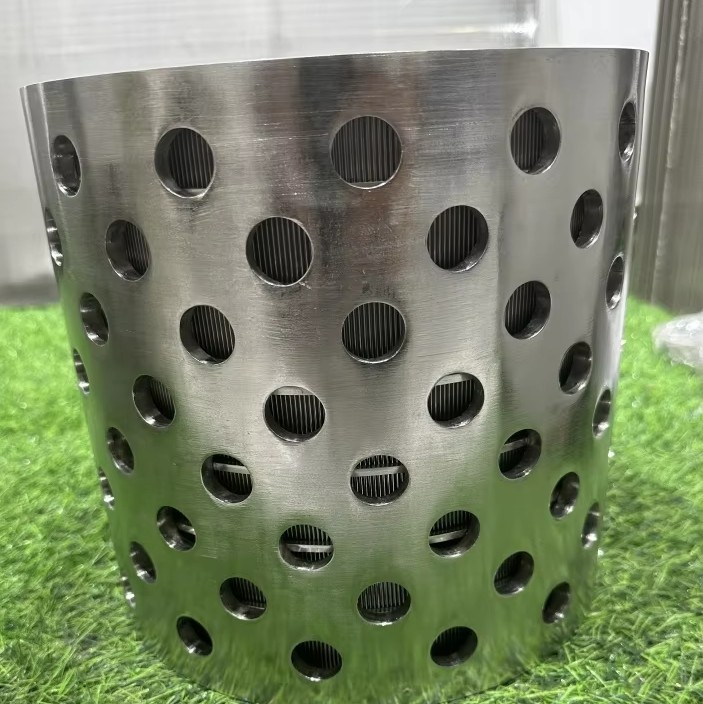
In industrial solid-liquid separation, high-flow conditions present a persistent challenge. Conventional screening equipment often struggles to maintain efficiency as throughput increases – flow rates surge, separation accuracy drops, and screen surfaces clog or wear prematurely. For industries ranging from coal preparation and mineral processing to food manufacturing and chemical engineering, finding a solution that simultaneously handles high volumes, delivers precise separation, and ensures long service life has become a critical operational priority.
The wedge wire bend screen (also known as a DSM-style screen) offers a proven answer to this challenge. This article explores how its unique structural design enables high-efficiency separation under high-flow conditions, supported by performance data and real-world applications.
The Shear Separation Principle: How It Works
Unlike conventional filtration screens that rely on particle size exclusion through apertures, the wedge wire bend screen operates on a fundamentally different mechanism: shear separation.
As slurry flows across the curved screen surface under gravity or centrifugal force, each V-shaped wedge wire cuts off a thin layer of liquid approximately half the slot width. The effective cut point (d₅₀) is therefore approximated by:
d₅₀ ≈ 0.5 × s (where s is the slot opening)
This means that a screen with a 0.10 mm slot can achieve an effective separation cut point of approximately 50 microns – significantly finer than the physical slot size would suggest.
The curved geometry plays a critical role. As feed material enters the screen tangentially, centrifugal force pushes the slurry against the screen surface, while gravity pulls it downward. The combination creates a thin, high-velocity film that continuously renews the screen surface, preventing particle accumulation and maintaining consistent separation performance.
Structural Advantages for High-Flow Operation
Several design features make the wedge wire bend screen particularly suited to high-flow applications:
1. Maximum Open Area
The wedge wire construction provides open areas up to 50% , far exceeding traditional perforated plates or woven mesh screens. This high porosity translates directly to greater hydraulic capacity, allowing large volumes to pass without compromising separation efficiency.
2. Self-Cleaning Surface Profile
The V-shaped profile of each wedge wire (wider at the bottom, narrowing to the top) creates a natural gap-clearing action. Particles that approach the slot are guided over the surface rather than lodging inside the opening. This self-cleaning characteristic means less frequent manual cleaning and sustained performance during extended runs – a significant advantage in continuous high-flow operations.
3. Static Operation, Minimal Energy Consumption
The bend screen is a static device with no moving parts. Separation is achieved purely through gravity and the inertia of the flowing slurry. In high-flow installations, this translates to near-zero energy consumption for the screening process itself, offering substantial operational cost savings compared to vibratory or rotary screening equipment.
Performance Data: Quantifying the Advantage
Operational data across multiple industries demonstrates the measurable performance advantages of wedge wire bend screens under high-flow conditions:
| Parameter | Typical Performance |
|---|---|
| Filtration accuracy slot size | 0.1 – 3.0 mm (customizable) |
| Single-unit throughput | Up to 800 m³/h |
| Separation efficiency | 92 – 97% |
| Slot tolerance | ± 0.01 mm |
| Service life vs. woven mesh | Up to 8–10 times longer |
In sugar processing, for example, wedge wire centrifuge screens have demonstrated remarkable longevity:
-
Traditional CrNi foil screens: average service life of 2–4 months in B-sugar service
-
Wedge wire screens: over 800 days in B-sugar, and over 1,000 days in C-sugar service
This represents a 200–300 times improvement in operational lifespan, dramatically reducing downtime and replacement costs.
ANDRITZ, a global process equipment manufacturer, reports that their wedge wire centrifuge screens achieve:
-
Up to 2% improvement in sugar retention
-
Up to 50% reduction in cycle time
-
Up to 50% less residual moisture
-
Up to 6% increase in sugar yield
-
Stress reduction from over 500 MPa to 275 MPa, significantly enhancing structural durability
Material Selection for High-Wear Applications
High-flow conditions accelerate screen wear, making material selection critical. Available materials span a range of corrosion and abrasion resistance profiles:
| Material | PREN* Value | Key Characteristics |
|---|---|---|
| 304 Stainless | ~19 | Standard general-purpose |
| 316L Stainless | 24–26 | Enhanced corrosion resistance |
| Duplex 2205 | 33–38 | Chloride resistance and high strength |
| Super Duplex 2507 | ≥40 | Maximum corrosion/abrasion resistance |
*PREN = Pitting Resistance Equivalent Number
Duplex stainless steels offer approximately 1.8 times the abrasion resistance of 304-grade material, making them particularly suitable for high-flow mineral processing applications where both corrosion and particle wear are concerns.
Case Examples: High-Flow Applications
Sugar Industry – Continuous Centrifuges
In raw sugar refining, high-flow centrifugation demands screens that resist blinding and maintain throughput during extended campaigns. Wedge wire screens with horizontal slot geometry enable:
-
Gentle crystal handling – minimizing breakage and maximizing crystal growth
-
Improved molasses purity – achieving differences of up to 0.3% in final product purity
-
Nickel-free construction – eliminating contamination risks in food applications using 316/316L stainless steel
-
Universal compatibility – fitting all major centrifuge brands without modification
Water and Wastewater Treatment
A water treatment facility processing high-volume municipal flow required a screen capable of continuous operation with minimal maintenance. A wedge wire bend screen with a 0.25 mm slot, measuring 1220 mm arc length by 710 mm width, was installed. The 316L stainless steel construction, using 1.5×2.5 mm wedge wire and 2×3 mm support rods, provided:
-
Consistent filtration performance under variable flow conditions
-
Long-term structural stability without distortion
-
Resistance to corrosion from chemically treated water streams
Coal and Mineral Processing
In coal preparation plants, wedge wire bend screens are commonly paired with centrifuges for coarse coal slime dewatering. The combination delivers:
-
Maximum solids recovery with minimal moisture content
-
Sustained performance under abrasive slurry conditions
-
Reduced maintenance intervals compared to polyurethane or rubber-clad screens
Addressing High-Flow Challenges: Design Considerations
For engineers specifying wedge wire bend screens for high-flow applications, several factors require attention:
Slot Size Selection
Slot size should be determined based on the particle size distribution (PSD) curve of the feed material. Industry practice recommends referencing the D90 value – or even finer – when establishing the target cut point. An oversized slot risks loss of valuable solids; an undersized slot increases pressure drop and accelerates blinding.
Arc Angle and Radius
The bend screen’s arc angle (commonly 45°, 60°, 90°, 120°, or 150°) determines feed residence time and dewatering effectiveness. In general:
-
Larger arc angles and radii → longer retention time → more thorough dewatering
-
Smaller arc angles → higher velocity → higher throughput capacity
The optimal selection balances throughput requirements against moisture targets.
Flow Rate and Efficiency Relationship
For any given screen design, there exists an optimal flow range for peak separation efficiency. Exceeding this range – while increasing throughput – results in:
-
Reduced effective cut precision (finer particles carried over)
-
Accelerated surface wear due to higher particle impact velocities
-
Increased fluid shear on the wedge wire profile
Conversely, operating below the optimum range may lead to insufficient surface renewal and the risk of blinding. This underscores the importance of sizing the screen to match the specific flow parameters of each installation.
Conclusion
The wedge wire bend screen has proven itself as a robust, high-efficiency solution for solid-liquid separation under high-flow conditions across multiple industries. Its advantages are grounded in fundamental engineering principles:
-
Shear separation enables cut points finer than physical slots
-
High open area supports elevated hydraulic capacity
-
Self-cleaning geometry maintains performance with minimal intervention
-
Static operation delivers low energy consumption and high reliability
-
Advanced materials provide durability in corrosive and abrasive environments
For engineers, plant operators, and project managers seeking a separation solution that performs reliably at high throughputs while controlling operational costs, the wedge wire bend screen represents a technically sound and economically attractive option.
As process demands continue to increase, this proven technology – combining centuries-old wire weaving principles with modern metallurgy and precision manufacturing – will undoubtedly remain at the forefront of industrial solid-liquid separation.
Please login to write a comment after