 English
 Español
 Français
 日本語
 한국어
 Deutsch
 Português
 Русский
 中文 (中国)

- Introduction
- Slot Tolerance: The Numbers That Define Performance
- The Self-Cleaning Advantage of V‑Shaped Geometry
- How Slot Precision Affects Separation Efficiency
- Slot Geometry vs. Round Pores: An Anti‑Clogging Comparison
- Beyond Separation: The Broader Impact of Tolerance
- The Manufacturing Precision Behind Tight Tolerances
- Quantifying the Value of Precision
- Conclusion
Introduction
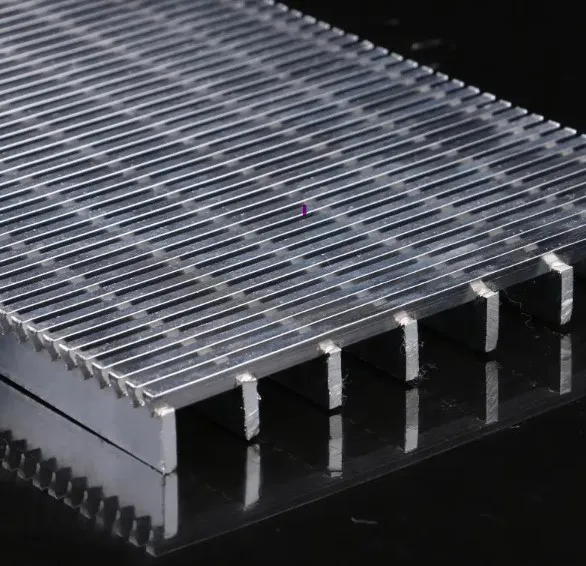
In solid-liquid separation, the gap between what is retained and what passes through is often measured in microns. For wedge wire screens — also known as Johnson screens — the precision of that gap, or slot, is not merely a manufacturing specification; it is the single most critical variable determining separation efficiency, flow capacity, and operational cost. Yet many operators underestimate how even microscopic deviations in slot tolerance can cascade into significant performance losses over time.
This article examines why slot precision matters, how tolerance variations affect separation performance, and what quantifiable impact precision manufacturing delivers in real-world applications.
Slot Tolerance: The Numbers That Define Performance
Slot tolerance is the allowable deviation from the specified slot opening. In wedge wire screen manufacturing, tolerance standards vary directly with slot size — the finer the slot, the stricter the tolerance requirement.
| Slot Range | Tolerance Standard | Source |
|---|---|---|
| 0.02 – 0.10mm | ±0.005mm | ADEN Wedge Wire |
| 0.10 – 0.50mm | ±0.01mm | ADEN Wedge Wire |
| ≤1.0mm | Mean ±0.025mm, SD 0.025mm | Hebei YUBO |
| 0.02 – 0.10mm | ±0.005mm | Jun Filters |
| 20μm slot | ±0.005mm | Huadong Pipe Manufacturing |
| 15μm minimum slot | Negative tolerance 5μm | Xinyuan Pipe Manufacturing |
| 20μm – 3000μm | ±5μm | Made-in-China Product Page |
| >10mm | ±0.20mm | ADEN Wedge Wire |
The critical insight from this data is the relative impact of tolerance. For a 20μm slot, a ±5μm deviation represents a ±25% variation in opening size. For a 200μm slot, the same absolute deviation is only ±2.5%. The smaller the slot, the greater the relative impact of tolerance on separation accuracy.
The Self-Cleaning Advantage of V‑Shaped Geometry
Wedge wire screens derive their exceptional anti-clogging performance from the distinctive V‑shaped profile of the wire. Unlike conventional round-wire or punched-hole screens, the wedge wire slot narrows from the outside inward — or in some designs, widens inward from the surface.
This geometry creates a critical self-cleaning mechanism:
-
Particles that match the slot size pass through cleanly without becoming lodged.
-
Particles larger than the slot are rejected and roll off the surface.
-
The expanding gap inward prevents particles from wedging tighter as flow pressure increases.
-
During backwashing, fluid flowing from the wider internal gap to the narrow surface opening creates a concentrated scouring action that effectively dislodges trapped particles.
The result is a screen that resists clogging — with documented blockage rates below 5% — and achieves backwash recovery rates that retain over 80% of initial flow capacity after 3‑5 cleaning cycles.
How Slot Precision Affects Separation Efficiency
The direct relationship between slot size and particle retention has been quantitatively validated in academic research. Studies on wedge wire screen filtration performance reveal a clear threshold:
When the slot aperture is at least approximately three times the particle characteristic size (d₉₅), passage rates of 75‑100% can be achieved.
Experimental data demonstrate this relationship:
| Slot Size | Particle d₉₅ | Passage Rate |
|---|---|---|
| 36μm | 12μm (ratio 3:1) | 79% |
| 75μm | 24μm (ratio 3.1:1) | 72% |
| 75μm | Larger particle size (ratio <3:1) | Only 15% |
When the aperture-to-particle ratio falls below 3, passage rates drop precipitously. This finding has direct implications for slot tolerance: if specified slot size is 40μm but actual slots range from 35μm to 45μm due to tolerance variation, then for particles around 12‑15μm, some sections of the screen will pass particles while others will retain them — producing inconsistent filtrate quality and unpredictable performance.
Slot Geometry vs. Round Pores: An Anti‑Clogging Comparison
Academic filtration studies have systematically compared wedge wire slots with conventional round-pore filters. The findings are illuminating:
-
A single spherical particle cannot block an entire slot the way it can block a round pore of comparable size.
-
10μm slot filters showed significantly less clogging than 10μm round-pore filters under identical conditions.
-
Slot filters achieved filtration fluxes as high as 9,000 L·m⁻²·h⁻¹ with minimal clogging signs.
-
For 2μm slot filters, clogging appeared at fluxes as low as 200 L·m⁻²·h⁻¹, but backwashing maintained average fluxes of 3,000 L·m⁻²·h⁻¹.
The key takeaway: slot geometry is inherently more resistant to blinding than round pores. However, the finer the slot, the more sensitive the system becomes to both tolerance precision and backwash design.
Beyond Separation: The Broader Impact of Tolerance
Slot precision affects far more than just particle retention. The cascading consequences of poor tolerance control include:
1. Flow Distribution and Localized Plugging
Non‑uniform slots create localized zones of higher flow velocity. These zones preferentially trap particles, leading to uneven filter cake formation, accelerated localized plugging, and premature overall pressure drop increase.
2. Backwash Inefficiency
Inconsistent slot openings mean backwash fluid follows the path of least resistance — preferentially cleaning wider slots while leaving narrower ones with accumulated debris. Over multiple cycles, this differential cleaning leads to irreversible capacity loss.
3. Reduced Service Life
Screens with tight tolerance control maintain consistent performance across thousands of operating cycles. Screens with wider tolerance variation suffer accelerated degradation, requiring more frequent replacement and higher total cost of ownership.
4. Process Predictability
For critical petrochemical, pharmaceutical, or food processing applications, predictable filtration performance is non‑negotiable. Slot tolerance directly determines whether a screen delivers batch‑to‑batch consistency or introduces variability into the separation process.
The Manufacturing Precision Behind Tight Tolerances
Achieving ±0.005mm tolerance on 20μm slots is not accidental. It requires:
-
Fully automatic CNC winding equipment that maintains consistent wire tension and positioning
-
In‑line laser measurement systems that continuously monitor slot size during production
-
Precision‑ground support rods with diameter tolerances better than ±0.01mm
-
Controlled manufacturing environments where temperature and vibration are managed to prevent microscopic deviations
The capital investment and process controls required for this level of precision are substantial — but so are the returns in terms of separation performance and operational reliability.
Quantifying the Value of Precision
For operators evaluating wedge wire screen suppliers, the data points are clear:
-
Precision slot tolerance (≤±0.005mm for fine slots) delivers predictable, repeatable separation performance.
-
V‑shaped geometry with consistent slots provides self‑cleaning capability and blockage rates below 5%.
-
Tight tolerance screens maintain higher initial flux and better backwash recovery over their service life.
-
The open area advantage of wedge wire screens — up to 65% open area versus 25‑40% for punched plate — is only fully realized when slot consistency is maintained across the entire screen surface.
Conclusion
Slot precision is not a minor specification detail; it is the foundation upon which reliable solid-liquid separation performance is built. The data shows that for fine slots, tolerance matters on a relative scale that can mean the difference between 79% and 15% passage efficiency — or between consistent filtrate quality and unpredictable process variability.
The V‑shaped wedge wire design offers inherent anti-clogging advantages that round-pore filters cannot match. But those advantages are only fully realized when slot tolerances are held to the tightest possible standards. For operators in water treatment, petrochemicals, mining, and food processing, selecting screens with documented precision tolerances is not an optional upgrade — it is a fundamental requirement for achieving optimal solid-liquid separation performance.
Please login to write a comment after